
Can All-on-4 Dental Implants Help With Significant Jawbone Loss?
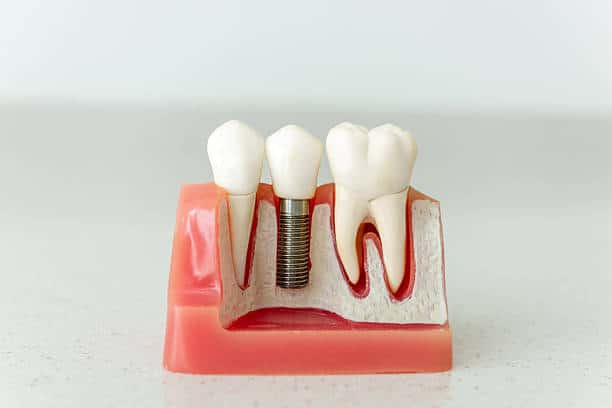
Many long-term denture wearers and patients with several missing teeth want fixed, implant-supported teeth but assume years of bone loss have closed that door. That worry is understandable, but it is not always accurate.
All-on-4 dental implants can help some patients with significant jawbone loss because the four implants are positioned strategically to use the stronger areas of the jaw that remain. The two angled rear implants may reduce the need for extensive grafting in certain cases, but they do not remove the need for a full anatomical and medical evaluation.
Tooth loss triggers gradual jawbone changes over time, and dentures do not stimulate bone the way natural roots or implants do. Bone loss also tends to look different in the upper jaw than in the lower jaw, which changes how a full-arch plan comes together. All-on-4 uses the available bone differently than conventional implant placement does, though severe bone loss may still call for grafting, implant-supported dentures, or a different treatment design altogether.
This guide walks through how jawbone loss affects candidacy for dental implants in Bonita Springs and dental implants in Estero that patients ask about, how All-on-4 works with reduced bone, and what determines whether full-mouth dental implants are realistic for your situation.
How Jawbone Loss Affects Full-Arch Implant Treatment
Jawbone loss is not just a cosmetic concern. It can affect implant anchorage, the implant length and diameter a dentist can safely use, gum and lip support, the space available for the prosthesis, bite position, treatment timing, grafting needs, and long-term maintenance. Understanding these effects is central to how our team plans dental implants for patients in Bonita Springs, and it helps explain why dental implants for bone loss and All-on-4 treatment in particular require more planning than a routine implant case.
Why the Jawbone Shrinks After Teeth Are Lost
Natural tooth roots transfer chewing forces into the surrounding bone, and that stimulation helps maintain the jaw’s shape and density. When a tooth is removed, that stimulation drops off, and the ridge gradually becomes shorter, narrower, or both, a process known as jawbone resorption. Researchers have documented how bone naturally resorbs after tooth loss, describing it as a predictable response of bone tissue to reduced use. The rate and pattern of this bone loss after tooth loss vary from patient to patient and from one area of the mouth to another, which is why anyone considering tooth replacement in Bonita Springs, FL benefits from an individual evaluation rather than a general timeline.
How Long-Term Denture Wear Can Change the Jaw
Traditional dentures rest on the gums and the underlying ridge rather than transferring force through an artificial root. Over years of wear, this can contribute to gradual ridge shrinkage, a looser denture fit, reduced facial height, and less support for the lips and cheeks. Many long-term denture wearers, including patients wearing dentures in Estero and nearby communities, notice they rely more on adhesives, chew less comfortably, and need relines or a new denture more often.
To be clear, dentures do not directly cause every case of bone loss. Tooth loss and the lack of root stimulation are the primary drivers, while denture pressure and the ridge changes that follow can still affect comfort and fit. Patients who have worn traditional dentures for many years often benefit most from an evaluation, since bone changes tend to be more advanced by that point, and some may find implant-supported dentures in Bonita Springs a more stable option going forward.
Why Severe Bone Loss Makes Implant Placement More Complex
Implants need adequate bone height, width, and density to stay stable. Severe bone loss can also change the shape of the ridge and bring the safe placement zone closer to nerves or the sinus cavity. When these factors are limited, a standard vertical implant may not have enough room to achieve proper implant stability. Patients researching this often want to understand how bone density affects All-on-4 stability, since it plays such a central role in treatment planning.
How All-on-4 Uses Available Bone Differently
All-on-4 does not create new bone. It uses the bone a patient already has more strategically, positioning four implants across the arch so that the two rear implants can be angled to reach stronger bone and work around certain anatomical limits. This is the core idea behind All-on-4 treatment at our Bonita Springs practice: full-arch dental implants and a four-implant smile restoration built around each patient’s actual anatomy, not a fixed template. It is also the same principle our team applies to implant dentistry cases in Bonita Springs with reduced bone volume.
Four Implants Support a Full-Arch Restoration
In a typical All-on-4 dental implant case in Naples, two implants are placed toward the front of the arch, and two posterior implants are placed at an angle. Together, they support one connected implant-supported bridge that distributes chewing forces across all four implants rather than concentrating force on a single point. It is worth remembering that “four” describes the treatment concept, not a guarantee that every arch uses the same implant number or position. Some patients may need a design that differs from the standard layout based on their own bone anatomy.
Angled Rear Implants Can Reach Stronger Bone
Angling the posterior implants changes the path they take through the jaw. A longer, angled path can let the implant engage more favorable bone, increase the front-to-back spread of the four implants, and reduce the length of unsupported bridge extending beyond the last implant. In the upper jaw, angulation can also help implants avoid the maxillary sinus, and in the lower jaw, it can help avoid certain nerve-related limitations. Better implant distribution generally supports the full-arch bridge more evenly.
Strategic Implant Placement May Reduce Grafting Needs
Strategic placement can reduce the need for extensive bone grafting for dental implants in some cases, but it does not eliminate it for everyone. Mild or moderate bone loss often leaves usable bone in the front of the arch, and angled placement can help avoid severely resorbed areas toward the back. Small grafts may still be placed around individual implants, and patients with significant ridge deficiencies may still need staged bone augmentation before implants can be placed. Upper-jaw anatomy tends to increase the likelihood of needing some grafting compared with the lower jaw.
Upper and Lower Jawbone Loss Require Different Dental Planning
Bone loss does not affect the upper and lower jaw the same way, and that difference shapes how a full mouth dental implants plan comes together. Patients across Southwest Florida considering upper jaw All-on-4 or lower jaw All-on-4 treatment benefit from understanding these differences before a CBCT scan is even taken.
Softer Upper-Jaw Bone Can Make Stability More Challenging
The upper jaw often has lower-density bone than the lower jaw, along with sinus-related limits, thinner bone toward the back of the mouth, and a different pattern of force distribution during chewing. These factors, tied to the jaw’s underlying sinus anatomy, can make it harder to achieve strong initial implant stability in a severely resorbed upper arch. As a result, All-on-4 upper arch cases often call for more detailed imaging, planning, and a prosthetic design built specifically around the available maxillary bone loss pattern.
Denser Lower-Jaw Bone May Offer Stronger Initial Support
The lower jaw typically has denser bone, especially toward the front, which can support strong initial implant stability. That said, denser bone does not automatically make every lower-jaw case simple. A narrow ridge, significant vertical bone loss, limited posterior height, proximity to the inferior alveolar nerve, and strong bite forces can all still complicate a lower arch All-on-4 plan tied to mandibular bone loss.
Bone Distribution Matters More Than Bone Volume Alone
Candidacy depends on where bone remains, not just how much bone is left. Anterior bone often differs from posterior bone, and width matters as much as height when planning implant spread and the space needed for the final restoration. Bone volume describes quantity. Bone distribution describes location. Full-arch implant planning requires looking at both, since uneven resorption or a localized defect can limit implant placement and available restorative space, even when the overall bone volume looks adequate on a two-dimensional X-ray. This is one reason three-dimensional imaging plays such a central role in All-on-4 planning.
How Dentists Evaluate All-on-4 Candidacy With Bone Loss
A responsible All-on-4 consultation looks at the patient as a whole rather than making a decision from a single X-ray or one bone measurement. Board-certified prosthodontist Dr. Anderson and the team combine imaging, a clinical exam, and a review of medical history before recommending a treatment path. When comparing providers, patients considering the best All-on-4 dentist for their situation should look for this kind of thorough, individualized evaluation rather than a one-size-fits-all recommendation.
3D CBCT Imaging Maps Bone, Nerves, and Sinuses
3D dental imaging, using CBCT scans for All-on-4 case planning, helps the dental team assess bone height, width, contour, and defects, along with the location of the sinus and nerves, planned implant trajectories, and the prosthetic space needed for the final restoration. This kind of digital implant planning gives a much more complete picture than a traditional flat X-ray, though guided implant surgery always needs to be combined with a hands-on clinical exam rather than used on its own.
Primary Stability Determines Whether Immediate Teeth Are Possible
Primary implant stability is the mechanical grip an implant has in the bone at the moment it is placed. It depends on implant position, bone density, controlled bite forces, and whether the implants can be splinted together for added support. Immediate-load implants, sometimes offered as Teeth in a Day, may be possible only when the implants achieve adequate stability and the provisional bridge can be designed to protect healing rather than overload it. Reviewing Teeth in a Day candidacy ahead of your consultation can help set realistic expectations about same-day temporary teeth.
Gum Health and Infection Must Be Evaluated
Active gum disease, abscesses, or untreated infection can affect surgical timing, healing, and long-term tissue stability. Supporting gum health for dental implants matters as much for patients from Bonita Springs as it does for those traveling from Estero for treatment. Failing or infected teeth may need to be removed as part of treatment. However, the surrounding gum tissue still requires careful management before and after implant placement to support a stable long-term result.
Medical History and Healing Capacity Affect Treatment Options
Factors such as diabetes control, smoking or nicotine use, medications that affect bone metabolism, immune conditions, a history of radiation treatment, and a patient’s ability to keep up with hygiene and follow-up visits may affect healing. None of these factors automatically rule a patient out, but they may require medical coordination or a change in how treatment is sequenced.
When Bone Grafting May Still Be Needed
All-on-4 can often work with less bone than a conventional implant plan, but severe jawbone loss still has limits. Understanding bone grafting before implant placement helps set realistic expectations about when All-on-4 alone is enough and when additional support is needed first.
Severe Ridge Loss May Leave Too Little Bone for Safe Placement
Extreme bone loss can restrict implant length, angle, and spread, which in turn limits restorative support and soft-tissue contours, and can affect facial appearance. Angled implants help make efficient use of available bone, but they cannot compensate for every anatomical deficiency.
Upper-Jaw Treatment May Require Sinus or Ridge Augmentation
Some upper-arch cases need a sinus lift, ridge augmentation, particulate grafting, or a period of staged graft healing before implants can be placed safely. Not every upper-jaw patient needs an upper jaw bone graft. Still, it remains a real possibility that a thorough evaluation should address early rather than as a surprise mid-treatment.
Small Grafts May Be Used Around Implants During Surgery
There is an important difference between extensive staged bone reconstruction and a small, localized graft placed around an implant gap during surgery. Patients sometimes hear “no major grafting” and assume no graft material was used at all, when in fact a small amount of socket or contour grafting may still have been part of the procedure.
Alternative Full-Arch Designs May Be More Appropriate
When bone anatomy does not support a standard All-on-4 layout, alternatives may include more than four implants, implant-supported dentures with fewer implants, staged grafting followed by implants, traditional dentures, or referral for more advanced surgical planning. Patients from Estero exploring denture implants near Estero, as well as those closer to Bonita Springs, may find that one of these full-arch implant options fits their anatomy better than a standard All-on-4 layout. A CBCT-based evaluation typically points toward one of these paths:
- Sufficient strategic bone – All-on-4 may be possible with the standard implant design.
- A localized deficiency – All-on-4 plus a minor graft may still achieve a stable result.
- A severe deficiency – staged grafting or an alternative full-arch design may be recommended.
- Limited surgical candidacy – an implant-supported overdenture or a well-fitted denture may be the more realistic option.
All-on-4 Compared With Implant-Supported Dentures for Bone Loss
Patients with reduced bone volume often ask whether a fixed implant bridge like All-on-4 or removable implant dentures make more sense for their situation. Both use implants for support, but they differ in how they attach and how much bone they typically require.
| Feature | All-on-4 (Fixed) | Implant-Supported Dentures (Removable) |
|---|---|---|
| Attachment | Fixed to implants; removed only by the dental team | Snaps onto implants and can be removed by the patient |
| Typical Implant Number | Four implants per arch | Often two to four implants, depending on the case |
| Bone Requirements | Requires enough strategic bone for four stable implants | May work with less bone in some cases |
| Grafting Likelihood | May be reduced with angled placement, but not guaranteed | Also depends on bone volume and implant count |
| Daily Maintenance | Cleaned in place like natural teeth, with professional checkups | Removed daily for cleaning |
| Feel and Function | Closer to natural fixed teeth | More stable than traditional dentures, though still removable |
Fixed All-on-4 Teeth Stay Attached to the Implants
A fixed All-on-4 bridge generally stays attached to the implants and is only removed by the dental team when professional maintenance calls for it. Patients clean it in place, similar to natural teeth, and the restorative materials are chosen to hold up to normal bite function over time. It is not maintenance-free, and regular checkups remain part of long-term care.
Implant-Supported Overdentures Remain Removable
Implant-supported dentures, sometimes called snap-in dentures, connect to implants and generally offer better retention than a conventional denture, while still allowing the patient to remove the appliance for cleaning. This option can sometimes work with fewer implants and in bone conditions that would not support a full fixed bridge, which is why patients from Bonita Springs and Estero with more limited bone volume often ask about it directly.
Bone, Lifestyle, and Budget Shape the Final Recommendation
The right choice often comes down to available bone, desired stability, hygiene ability, restorative space, facial support needs, financial priorities, maintenance preferences, and overall health. A fixed bridge is not automatically the better choice for every patient. The decision works best as a conversation about what matters most to you, weighed against what your anatomy will support.
How All-on-4 May Help Preserve Remaining Jawbone
All-on-4 cannot bring back bone that has already been lost, but it can support jawbone preservation and long-term implant stability going forward. What it can do is transmit functional forces into the bone that remains, which may help maintain support around the integrated implant sites.
Implants Transfer Chewing Forces Into Bone
Implants act as artificial anchors that carry bite forces into the surrounding bone. Bone responds to controlled loading, and that controlled loading can support ongoing bone maintenance around the implant. This differs from uncontrolled overload, which can create problems rather than benefits.
Bone Preservation Depends on Healthy Implant Integration
Long-term bone support around an implant depends on successful osseointegration, consistent plaque control, a stable bite, and regular professional monitoring. Without these, peri-implant health can decline even after a technically successful placement.
Full-Arch Design Can Restore Facial and Bite Support
A well-designed full-arch restoration can help restore vertical dimension, lip and cheek support, tooth display, and a more natural chewing position. This support comes from a combination of the implants and the design of the prosthesis itself, not from the implants alone.
What to Expect From All-on-4 Treatment With Bone Loss
All-on-4 treatment with reduced bone follows a similar general path to a dental implant consultation for full mouth dental implants. However, the pacing and details are adjusted around each patient’s bone anatomy.
Consultation, CBCT Imaging, and Restorative Planning
Treatment typically begins with a health history review, a clinical exam, a gum assessment, 3D imaging, bone mapping, and bite records. This is also when the dental team discusses whether a fixed or removable option fits your goals. Many patients find it helpful to prepare questions ahead of your first implant consultation so nothing important gets missed.
Removing Failing Teeth and Placing Implants
When failing teeth remain, treatment may include extractions, infection removal, site preparation, implant placement, and localized grafting when needed. A provisional restoration may be placed the same day in some cases, but extractions and implants do not always happen in a single visit for every patient.
Wearing Temporary Teeth While the Implants Heal
A temporary All-on-4 bridge protects appearance and supports limited function while implants heal. It also helps shape the surrounding gum tissue into its final contour as healing progresses. Patients may need a modified diet at first, and the temporary bridge is often adjusted during this healing period.
Transitioning to the Final Full-Arch Restoration
Once healing is complete, the final restoration is designed around bite, fit, appearance, speech, tissue contours, and hygiene access, so the finished bridge is easy to keep clean around each implant. The restorative material and design are customized to each patient’s needs and long-term goals.
Risks and Limitations Patients Should Understand
All-on-4 treatment carries the same general dental implant failure risk and full-arch implant complications that come with any implant procedure, and implants placed in cases of severe bone loss can add a few additional considerations. Understanding these All-on-4 risks upfront helps set realistic expectations before treatment begins.
Not Every Bone-Loss Case Qualifies for Immediate Loading
Immediate temporary teeth depend on adequate implant stability and a protected bite. When stability is not sufficient, the dentist may recommend delayed loading, a removable temporary restoration, additional healing time, grafting, or a different implant design altogether.
Smoking and Poor Hygiene Can Affect Implant Health
Smoking and inconsistent hygiene can delay healing, contribute to inflammation, and increase the risk of peri-implant disease, bone loss around implants, and other restoration complications over time. According to the American Dental Association, maintaining good oral hygiene and following your dentist’s guidance both play an important role in how well an implant performs long-term.
Strong Bite Forces Can Overload the Restoration
Bruxism, uneven bite contacts, and hard-food habits can put extra stress on a full-arch restoration and lead to implant overload if left unmanaged. A protected provisional bridge, a nightguard when appropriate, and periodic bite adjustments all help preserve full-arch implant stability and protect the investment in treatment.
The Prosthesis Will Still Require Maintenance
An All-on-4 restoration needs professional cleanings, home hygiene, periodic checks of the screws and components, and monitoring of bone levels around each implant. The dental team may also need to remove the prosthesis occasionally for professional servicing. Worn teeth may need repair or replacement over time. All-on-4 is a long-term solution, but it is not permanent in the sense that it never needs upkeep.
Common Questions About All-on-4 and Jawbone Loss
Can I get All-on-4 implants if I have severe bone loss?
Some patients with significant bone loss can still qualify for All-on-4 when enough strategically located bone remains to support stable implant placement. A CBCT-based evaluation is the only reliable way to determine feasibility for your specific anatomy.
Does All-on-4 always avoid bone grafting?
No. Angled implants may reduce the need for extensive grafting in some cases, but they do not eliminate it. Patients with severe bone deficiencies may still need augmentation before or during implant placement.
How much bone is needed for All-on-4 implants?
There is no single measurement that applies to every patient. The dentist evaluates bone location, density, height, width, overall anatomy, and the planned restoration design together to determine candidacy.
Can long-term denture wearers qualify for All-on-4?
Many long-term denture wearers remain potential candidates. Bone loss may change implant position or the overall treatment design, which is why three-dimensional imaging is such an important part of the evaluation.
Is the upper jaw harder to treat than the lower jaw?
Upper-jaw bone is often softer, and sinus anatomy can reduce the amount of usable bone toward the back of the mouth. Careful CBCT-based planning can address many of these challenges, though some upper-arch cases do require additional procedures.
Can All-on-4 prevent further bone loss?
Integrated implants transfer functional forces to the surrounding bone, which may help support bone maintenance around the implant sites. Ongoing oral hygiene and regular checkups remain essential to protecting that benefit over time.
What happens if I do not have enough bone for four implants?
Depending on anatomy and overall health, the dentist may recommend grafting, an alternative implant configuration, an implant-supported overdenture, or another restorative plan suited to your bone volume.
Are All-on-4 implants the same as permanent dentures?
All-on-4 typically supports a fixed full-arch bridge that stays in place except for professional maintenance visits. Implant-supported overdentures remain removable by the patient. Both options require ongoing care to stay healthy and functional.
Find Out Whether Your Remaining Bone Can Support Full-Arch Implants
Significant jawbone loss does not automatically rule out fixed, implant-supported teeth. The next step is understanding where healthy bone remains, whether implants can achieve adequate stability, and which full-arch design fits your anatomy and long-term goals.
Patients from Bonita Springs, Estero, Miromar Lakes, Naples, Fort Myers, and nearby Southwest Florida communities can schedule an implant evaluation to find out whether All-on-4 fits their anatomy and long-term goals. For patients whose bone volume points toward a different approach, implant-supported dentures remain a well-supported alternative that our prosthodontic team can walk through at the same visit.
