
Front Tooth Dental Implants in Bonita Springs, FL: How Placement, Gums, and Crown Design Create a Natural-Looking Smile
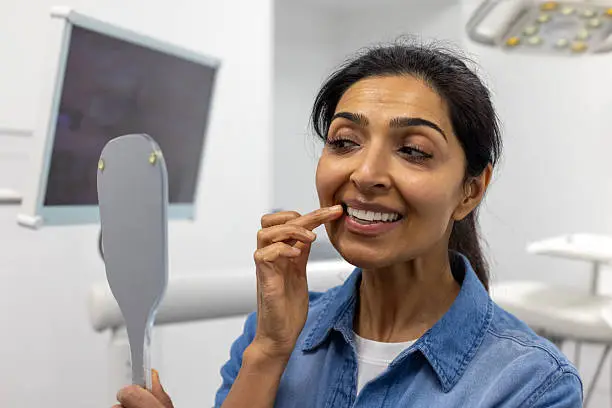
A missing front tooth can be replaced with a dental implant but the more important question isn’t whether it’s possible. It’s what makes the result look natural. A natural-looking dental implant depends on more than the implant itself. It also depends on the surrounding gum tissue and the design of the implant crown that sits above the gumline.
A front tooth implant should not simply fill a gap. Its position needs to let the crown emerge naturally from the gums and blend visually with the teeth next to it. Patients considering front dental implants in Bonita Springs can start by understanding how these three pieces work together. This helps set realistic expectations for tooth replacement in Bonita Springs, FL.
This guide explains how a dental implant dentist plans for a front tooth implant. It also covers what role the gums play in the outcome. And it explains how the final crown is designed to look like a natural part of your smile.
Why Front Tooth Dental Implants Require Precise Esthetic Planning
Front teeth sit in a different category than back teeth when it comes to implant planning. A discrepancy that would go unnoticed around a molar can become obvious at the front of the smile. Small differences in tooth position, tooth length, gumline height, or smile line symmetry are more visible here. So are differences in implant crown shape, shade, and translucency. Because front teeth show during smiling and speaking, esthetic dental implants in this area demand a higher level of planning than implants placed further back.
This is why esthetic zone implants often call for a dentist experienced in implant dentistry in Bonita Springs, especially for a single visible tooth.
The Front Teeth Sit in the Most Visible Part of the Smile
Dentists often refer to the front teeth as the anterior esthetic zone. This area sits directly along the smile line, where it is visible every time a person smiles, speaks, or laughs.
Because this zone gets so much visual attention, tooth shape and gum contours carry more weight here than they do elsewhere in the mouth. A single front tooth implant has to hold up to close, repeated viewing.
Implant Position Affects the Shape of the Final Crown
Where the implant sits determines where the implant crown above it can emerge. This includes the implant’s buccal-lingual position (toward the lip or toward the tongue), its mesial-distal position (side to side), its depth, and its angle.
These factors define the available restorative space. When implant position is planned around the ideal outcome for the crown, dentists call this prosthetically driven implant placement. This form of restorative implant planning puts the final tooth first, before the implant itself is placed. Getting this right at the start of front tooth replacement makes a significant difference later.
The Gumline Must Coordinate With Neighboring Teeth
Symmetry between the implant site and the natural teeth beside it plays a major role in how convincing the final result looks. This includes the height of the gingival margin, the shape of the papillae between teeth, and tissue thickness. These factors directly influence crown emergence, or how the crown appears to rise out of the gums.
Gum recession around the implant can also affect how the crown looks over time. Gum contours cannot always be recreated to match the original tooth exactly. A dentist will discuss what outcome is realistic based on your individual anatomy.
What Happens to the Bone and Gums After a Front Tooth Is Lost?
Once a front tooth is missing, the bone and gum tissue that supported it begin to change. Understanding this process helps explain why the timing of tooth replacement matters for front dental implants in Bonita Springs.
Bone Begins Remodeling After Tooth Loss
A natural tooth root stimulates the surrounding bone every time a person bites or chews. Once that tooth is extracted, the bone no longer receives that stimulation, and it begins to remodel.
This remodeling often affects the facial or buccal side of the bone, the surface closest to the lips. Research using CBCT imaging on maxillary central incisor extraction sites has confirmed that this bone contour continues to change during the months following extraction. However, the degree of change varies from patient to patient. Not every patient experiences the same amount of bone loss after tooth extraction.
Gum Contours Can Change as the Ridge Shrinks
Bone provides the underlying support for gum tissue. When that bone shrinks, the gum architecture above it can shift as well.
This may affect gum height, tissue volume, and the shape of the papillae between teeth. These changes can influence how a future implant crown will look once it is placed.
Existing Bone and Gum Tissue Shape the Treatment Plan
Before recommending a treatment approach, a dentist evaluates several factors around the missing tooth site. Together, these factors show how much bone support is available for a front tooth implant. This evaluation typically includes:
- Bone height and width
- Condition of the facial bone
- Gum tissue thickness
- Position of neighboring tooth roots
- Signs of infection
- Available restorative space
This evaluation usually happens during a dental implant consultation, where imaging and a clinical exam help determine the right path forward.
How 3D Implant Planning Helps Position a Front Tooth Implant
Digital planning tools give dentists a detailed view of the bone and tissue around a missing front tooth before any surgery takes place. This kind of 3D dental implant planning is especially important in the esthetic zone.
CBCT Imaging Shows the Bone Around the Missing Tooth
Cone Beam CT scanning captures a three-dimensional image of the jaw. This type of CBCT dental implant planning lets a dentist evaluate ridge dimensions and the condition of the facial bone. It also shows the position of neighboring roots and any anatomical boundaries or bone defects near the implant site. Patients can learn more about how 3D CBCT scans improve dental implant planning in a separate guide focused on this technology.
The Future Crown Should Be Planned Before Implant Placement
One of the most important steps in front dental implant planning happens before the implant is placed. The dentist works backward from the ideal position of the future tooth to determine where the implant should go.
This approach, often called restorative-driven implant placement, considers the desired crown emergence and trajectory first. Planning the implant around the final tooth, rather than only around available bone, supports a more natural-looking outcome.
Implant Angle Influences Where the Crown Emerges
The angle at which an implant is placed affects more than stability. An unfavorable angle can complicate crown design, shift the location where the screw access sits, and affect tissue contours and overall esthetics around the restoration.
Careful angle planning during digital implant planning helps avoid these complications before they happen.
Why Gum Contours Matter Around a Front Dental Implant
Gums around dental implants play one of the most important roles in how natural a front tooth implant looks. In esthetic implant dentistry, the gums around a front tooth implant often matter as much as the implant and crown combined. This section covers what makes gum health and gum shape so important in this area.
Healthy Gum Tissue Frames the Implant Crown
Gums create the visible transition between the implant crown and the rest of the smile. Healthy tissue supports a stable gingival margin and symmetrical appearance next to neighboring teeth.
Inflammation and inconsistent plaque control can disrupt this appearance over time. Keeping gum tissue healthy is part of maintaining the gum contour around the implant that supports a natural-looking dental implant over the long term.
The Papilla Helps Fill the Space Between Teeth
The interdental papilla is the small triangle of gum tissue that fills the space between two teeth. Around a front implant, a well-formed papilla helps avoid a visible dark triangle between the crown and the neighboring tooth.
Papilla regeneration cannot always be guaranteed, since it depends on the surrounding bone and tissue. A dentist will assess this during planning to set realistic expectations.
Tissue Thickness Can Influence Recession Risk
Some patients have naturally thin gum tissue, while others have thicker tissue. This difference, known as tissue phenotype, can influence how the tissue responds around an implant over time.
Thinner tissue may carry a higher chance of visible restorative challenges, including recession. In some cases, a dentist may recommend soft-tissue augmentation as part of the treatment plan.
The Temporary Crown Can Help Shape the Gum Tissue
Many patients wear a temporary crown while the implant heals. Through a process called tissue conditioning, this temporary restoration can be shaped to guide the gum into a controlled emergence contour.
That shaped contour then serves as a guide for the final crown design, since provisionalization is case-dependent. Not every patient’s treatment plan will use this step in the same way.
When Bone Grafting May Be Needed for a Front Tooth Implant
Sufficient bone volume supports both the stability of the implant and the appearance of the surrounding tissue. For patients with limited bone at the site, bone grafting for dental implants is sometimes part of the treatment plan.
Thin Facial Bone Can Affect Implant Placement
If the facial bone at a front tooth site is thin, placement matters even more. Positioning an implant too close to that surface can increase the chance of tissue complications later. Bone anatomy and implant position are closely connected in this part of the mouth, and adequate implant bone support is part of what makes a stable, natural-looking result possible.
Bone Grafting Can Rebuild Missing Ridge Volume
When bone volume is insufficient, a dentist may recommend a grafting procedure. Depending on the situation, bone grafting can help rebuild missing ridge volume through socket preservation at the time of extraction, localized grafting, or ridge augmentation.
These procedures aim to rebuild the volume needed to support both the implant and the surrounding tissue. This is one reason grafting cases often require additional planning time before implant placement.
Not Every Front Tooth Implant Requires a Bone Graft
Bone grafting is not automatic for every patient. Whether a front tooth bone graft is needed depends on existing anatomy, extraction history, any signs of infection, the timing of implant placement, and the desired final implant position. A dentist reviews these factors individually before making a recommendation.
Can a Front Tooth Be Removed and Replaced With an Implant the Same Day?
Patients often want to know how quickly a missing front tooth can be addressed after an extraction.
Immediate Placement May Be Possible After Extraction
In some cases, a same-day tooth extraction and implant appointment is possible. This is known as immediate implant placement, meaning the implant is inserted into the socket right after the natural tooth is removed.
Immediate placement does not automatically mean the final crown is delivered that same day. The two steps are separate, and healing time is usually still required before the permanent crown is placed. Patients can read more about replacing a front tooth after extraction for a closer look at this process.
Bone and Infection Conditions Affect Immediate Implant Candidacy
Whether immediate placement is an option depends on several factors. These include socket anatomy, the amount of available bone, any active infection, tissue condition, and the implant’s initial stability. Not every extraction site is a good candidate for this approach.
A Temporary Tooth May Protect Appearance During Healing
While the implant heals, patients often wear some form of temporary tooth. This may be an implant-supported provisional, a temporary removable tooth, or a temporary bridge, depending on the case.
Whichever option is used, its purpose is the same: protecting the implant site and maintaining appearance during healing.
How the Implant Crown Is Made to Look Like a Natural Front Tooth
Once the implant has healed, attention shifts to the restorative side of treatment. This is where the final dental implant crown is designed and placed.
Crown Shape Should Match the Neighboring Teeth
A well-designed implant crown considers the width, length, incisal edge, and surface anatomy of nearby teeth. Symmetry with the adjacent tooth is often the goal.
Exact duplication is not always the right approach, especially if the natural teeth on either side are not perfectly symmetrical themselves. In these cases, the dentist may design the crown to fit the overall smile rather than mirror one specific tooth.
Shade Matching Includes More Than Choosing a White Color
Shade matching for a front tooth implant crown involves more than picking a shade of white. Dentists also consider hue, value, chroma, translucency, and surface texture, comparing these details to the neighboring natural teeth.
This same attention to shade and shape appears in other areas of cosmetic dentistry. It shows up especially in shade and shape matching used for veneers, where similar principles apply.
The Crown’s Emergence Profile Affects How Natural It Looks
Emergence profile refers to the way the crown transitions from beneath the gumline into the visible part of the tooth. This transition depends on the implant’s position, the abutment connecting it to the crown, and the crown’s contour.
A well-planned emergence profile allows the crown to look like it grows naturally out of the gums, rather than sitting on top of them. This detail separates a natural-looking dental implant from one that looks noticeably artificial.
The Bite Must Be Checked Before the Restoration Is Finished
Front teeth handle forces during biting, speaking, and forward or side-to-side jaw movement. Before finishing the restoration, a dentist checks how the new crown interacts with the opposing teeth.
Proper bite adjustment supports the long-term stability of the crown and the implant beneath it.
What Can Make a Front Dental Implant Look Less Natural?
Several factors can affect how natural a front implant appears. None of these outcomes are inevitable, but understanding them helps patients recognize what good planning aims to prevent.
Implant Placement That Limits Crown Position
An implant placed in a less favorable position can restrict how the crown is shaped and positioned above the gumline. Over time, this can lead to compromises in the final appearance.
Gum Recession Around the Implant
If the gum recedes around an implant, the crown or abutment margin may become visible. This can also change the symmetry with neighboring teeth.
Loss of Bone or Soft-Tissue Volume
When bone or soft tissue volume decreases over time, the transition between the crown and the gums can shift. It may become less smooth or less natural in appearance.
A Crown That Does Not Match Neighboring Teeth
Differences in shade, shape, translucency, length, or surface texture can affect how the crown blends with nearby teeth. These mismatches between the implant crown and the natural teeth can make the restoration stand out rather than blend in.
How to Protect a Front Dental Implant Long Term
Caring for a front dental implant is similar to caring for a natural tooth, with a few additional considerations.
According to the American Dental Association, dental implants function much like natural teeth and depend on ongoing care to stay stable. Recommended habits for dental implant maintenance include:
- Brushing at least twice daily
- Cleaning between teeth with floss or interdental brushes
- Attending professional cleanings and periodontal monitoring appointments
- Having your bite evaluated periodically
- Managing grinding or clenching habits
- Avoiding habits that put excess stress on the crown, such as chewing ice or opening packages with your teeth
Consistent implant crown care supports gum health around implants and contributes to dental implant longevity over time.
Common Questions About Front Dental Implants
Do front dental implants look natural?
Careful implant position, healthy gum tissue, and thoughtful crown design can create a highly natural appearance. Outcomes still depend on each patient’s individual anatomy and healing.
Can one missing front tooth be replaced with one implant?
Often, yes. A single implant can support a single crown when the surrounding bone, tissue, spacing, and overall health are appropriate for treatment.
Will I be without a front tooth while the implant heals?
Temporary tooth-replacement options are often available during healing, including implant-supported provisionals, removable temporary teeth, or temporary bridges, depending on the case.
Do I need a bone graft for a front tooth implant?
Not necessarily. Whether grafting is needed depends on the bone dimensions at the site and the planned implant position, not on the location of the tooth alone.
Can a front tooth be extracted and implanted the same day?
Sometimes. Immediate placement depends on the socket’s anatomy, whether infection is present, the amount of available bone, and initial implant stability.
Can the gum around a front implant recede?
Gum levels can shift over time. Tissue thickness, implant position, hygiene habits, and inflammation can all play a role in gum stability around an implant.
How is the implant crown matched to my other teeth?
The dentist evaluates shade, translucency, shape, surface characteristics, dimensions, and the surrounding gum contours to design a crown that fits naturally within your smile.
Plan a Front Tooth Implant Around Your Entire Smile
Replacing a visible front tooth involves more than one step. It requires coordinating the implant itself, the available bone, the surrounding gum tissue, and the crown people ultimately see when you smile.
If you are missing a front tooth and want to understand your options, Dr. Breanne Anderson and the team at Smile Rejuvenations of Southwest Florida can walk you through a comprehensive evaluation at our Bonita Springs office. We also welcome patients from Estero and nearby Southwest Florida communities who are exploring front tooth replacement options.
